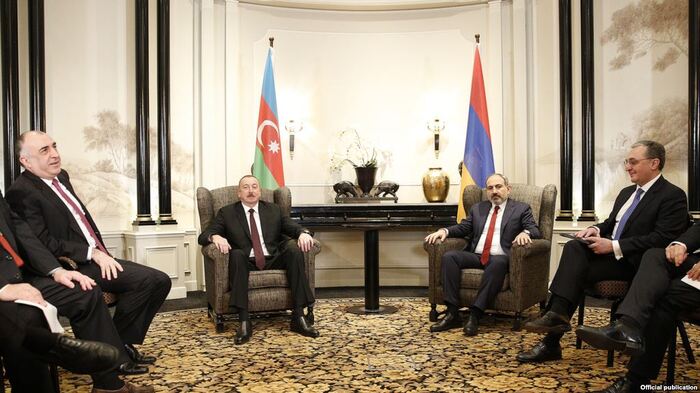
The first official round of negotiations between Azerbaijani President Ilham Aliyev and Armenian Prime Minister Nikol Pashinyan took place in Vienna on 29 March. The meeting lasted a total of three and a half hours, for a part of this time the two heads of state talked privately. The French co-chair of the OSCE-Minsk Group, Stefan Visconti, described the meeting as "effective and rich in content".
The statement by the OSCE-Minsk Group, which seeks to find a solution to the Nagorno-Karabakh conflict, mentioned that the meeting "was conducted in a positive and constructive atmosphere and gave the two leaders the opportunity to clarify their positions" , Aliyev and Pashinyan had exchanged views on "a number of key issues in the settlement process as well as the content of the negotiations". They reiterated that the ceasefire and direct communication mechanisms needed to be further strengthened. The two politicians also agreed on the development of a number of humanitarian measures. They also agreed to continue the direct dialogue.
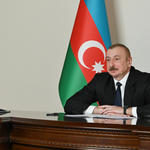
The Azerbaijani president said after the meeting that the negotiation process must be supported by humanitarian action. It is important that the format of the negotiations remains unchanged. "The negotiation process has received a new impetus. We considered the statement by the Co-Chairs of the OSCE-Minsk Group on March 9th, according to which a change in the negotiating format can only be made with the consent of the two parties", said Aliyev, referring to Armenian's multiple demands to include representatives of the internationally unrecognized Nagorno-Karabakh Republic in the negotiations as an equal party. For Azerbaijan, the question of deoccupating its occupied territories comes first. It is back to the point where you have to conduct "substantive negotiations", added Aliyev.
Nikol Pashinyan noted that there had been no revolution or breakthroughs in the talks. "Now is the time to consider whether the conflicting parties should, for example, seek a more stable situation on the ceasefire line. Can the conflicting parties ensure that people in the border villages can live a normal life and do agricultural work without being afraid of the enemy's shelling?", said the Armenian Prime Minister at a meeting with the Armenian diaspora in Austria. According to Pashinyan, it is important that a process has begun in which the parties have the opportunity to talk about their ideas, problems and agendas.
It is still unclear when a next meeting will take place. However, the foreign ministers of the two countries will meet again in the near future to continue the negotiation process.