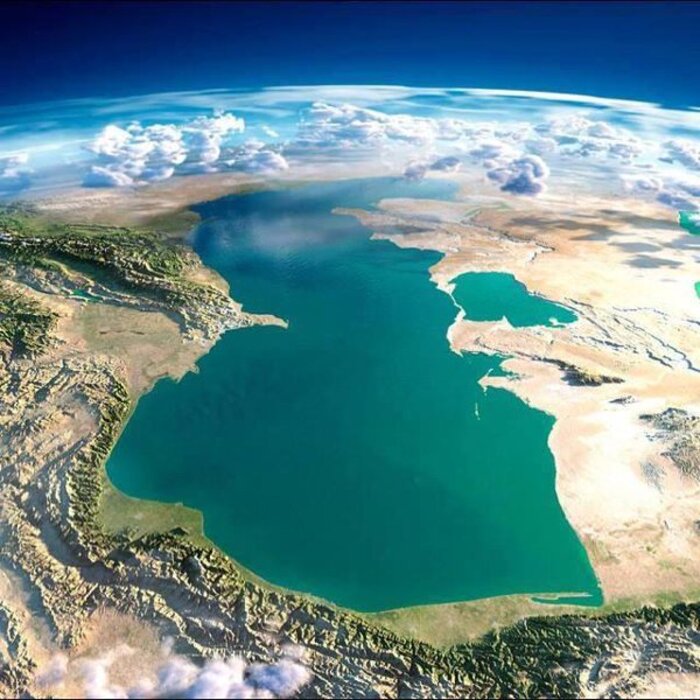
On 19 April the Iranian parliament approved to start a pilot project by pumping water from the Caspian Sea.
The plan foresees to transfer water via a 200km pipeline from the Mazandaran Province to the Semnan Province in Iran. The idea has been promoted as a solution to help meeting the growing demands of the agricultural, industrial and household sectors in the water-stressed regions. The plan involves transporting 100 million cubic meters of Caspian Sea water per year to Semnan after desalination.
“Although Iran is located in an arid and semi-arid area, having access to vast resources of salt water in the north (Caspian Sea) and the south (Sea of Oman and the Persian Gulf) offers good prospects. We can benefit from these unconventional resources via the use of modern technology”, said the Iranian Minister of Energy, Reza Ardakanian. By desalinating saline water in the north and south, water for drinking and industrial use could be produced, he added.
However, some environmentalists and MPs from the Mazandaran province have opposed the plan as an “unscientific” and “impractical” idea that would inflict irrevocable damage on the region’s ecology. They insist that pumping large amounts of water from the Caspian Sea would eventually lead to an increase in the sea’s salinity and endanger the natural habitats it supports. Desalination removes minerals from saline water but also produces huge quantities of brine, which is almost always dumped back into the sea. Another contentious issue is the route through which the pipeline would reach Semnan. “The pipeline would run through the Hyrcanian forests, necessitating the felling of trees in the ecologically-rich but vulnerable woodlands”, warned the former member of the World Water Council, Abbasqoli Jahani.
Those in favor of the project say 90% of the Caspian Sea water comes from rivers that originate in Russia and flow into the Iranian part of the Sea. So even if the brine is dumped back into the sea, it will not have a negative impact on the sea which holds an estimated 80,000 billion cubic meters of water. “Today, there are technologies that allow us to separate solid salt from the brine in the desalination process. Thus, no more brine will return to the sea”, Ardakanian said, adding that implementation of the scheme depends also on the economic viability and the cost of equipment and machinery
The unclear legal status of the Caspian Sea is another complex issue for the water transfer project. The body of water is bordered by Iran, Russia, Azerbaijan, Kazakhstan and Turkmenistan, and their governments have yet to agree on a fair and final deal related to water sharing. Decades of negotiations have not produced results acceptable to the five littoral states.