On 21 January, a brawl between the Armenian police and protesting livestock farmers broke out at the Mrgashat village section near the Armavir-Yerevan highway, reported news.am. A few hours earlier, the protesters closed the highway section but afterwards reopened it.
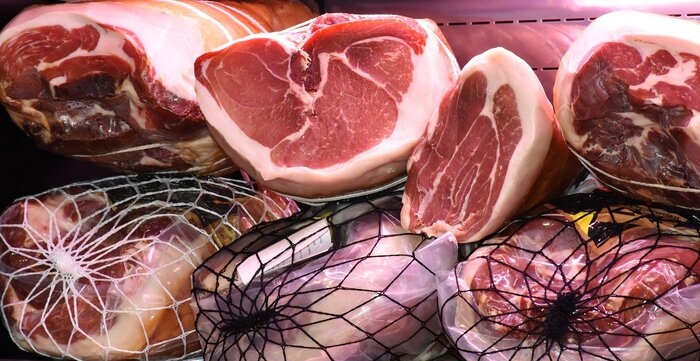
The reason for the protest lies on the ban on home slaughter of livestock imposed by Armenia's State Food Safety Service and which entered into force on 15 January. The ban stated that cattle and other farm animals can only be slaughtered at the 24 abattoirs currently operating in Armenia and that shops and market stalls would be now obliged to have documents certifying that their meat is supplied from those slaughterhouses.
Many of the affected farmers strongly opposed the new requirement, saying that it places a heavy financial burden on them. They said that they are already struggling to make ends meet and cannot afford the extra costs of transporting their animals to the abattoirs and paying for their slaughter. Disaffected meat vendors in Yerevan also make similar arguments.
They complained that many rural communities either have no vets at all or they are not enough to service all the communities. Besides, they were obliged to leave the skin and insides of the cattle to the slaughterhouse and are paid only for the 'net' meat only. As a result, the net profit from a cow or an ox makes ranges from 30 to 50 thousand drams. Protesters are also unhappy that slaughterhouses do not provide a vehicle for transporting livestock. Moreover, slaughterhouses often grade the meat as third-rate, paying a lower price. Cattle farmers consider this unreasonable as there are no clear-cut criteria for evaluating meat quality. Cattle breeders also are unhappy that they have to sell their milk at 100 drams per one litre, which later is resold three to four times higher.
The day after the ban entered into force, Armenia's State Food Safety Service and slaughterhouse owners signed a memorandum which set the prices for the services of slaughterhouses. According to the memorandum, transportation of animals (at least three animals) to slaughterhouse will be free for a distance of 30 km. In case of transportation of one animal, the fee will be 3 thousand drams, slaughtering a pig will cost a maximum of 5 thousand drams; slaughtering small cattle will cost a maximum of 3.5 thousand drams and slaughtering cattle will cost a maximum of 10 thousand drams.
The State Food Safety Inspectorate strongly defended the ban on home butchery. “There will be no step back because I don’t want our country to be stuck in the Middle Ages,” said Artur Shatvoryan, a senior official from the government agency.