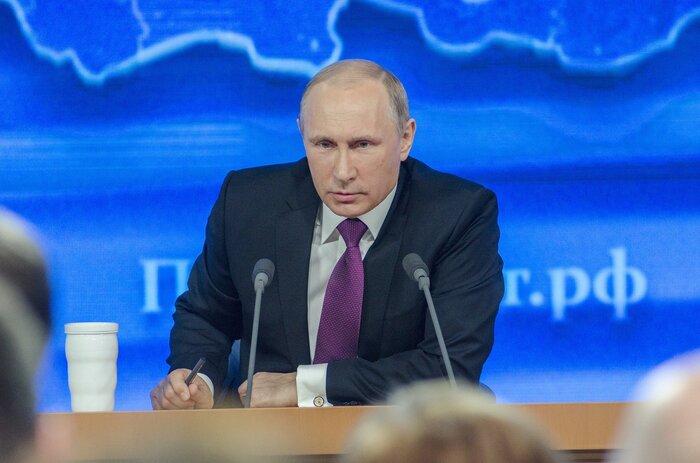
On 18 May, Russian President Vladimir Putin was forced to personally intervene in the epidemic sweeping Russia's North Caucasus republic of Dagestan, as local officials described the coronavirus situation as a “catastrophe." He promised to send aid to Dagestan, and asked residents not to gather for the Eid celebration marking the end of Ramadan this weekend.
Dagestan’s Health Minister, Dzhamaludin Gadzhiibragimov, said that 657 people had died of pneumonia in the region, including 40 medics. Dagestan's Mufti, Akhmad Abdulayev, described the situation as dire and pleaded to the Kremlin for help. Medical staff have been complaining of shortages of protective equipment and tests, and Abdulayev said that many people with the infection die at home and are buried at mass traditional funerals. “They are buried according to tradition and nobody counts them,” he said.
“Despite the alarming coronavirus situation in Dagestan, an irresponsible attitude towards prophylactic measures is observed among ordinary residents and among state servants,” Muslim Gasan-Guseinov, a member of the public headquarters stated. “Doctors of the region should publicize the problems existing in medical institutions regarding the COVID-19 situation”, said Ziyaudin Uvaisov, the head of the NGO Patient's Monitor.
Dagestan's Governor Vladimir Vasiliev defended the region's official coronavirus statistics but promised to "clarify" the number of fatalities among the region medics, amid reports that Dagestan's statistics could be distorted because "only 3% of families give consent to autopsies." Russia enters fatalities into its national coronavirus tally only after an autopsy has confirmed the infection was the primary cause of death. Critics have accused Russian authorities of downplaying the crisis and manipulating the figures by attributing coronavirus deaths to so-called community-acquired pneumonia and other medical conditions.
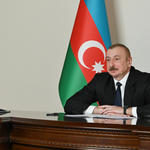
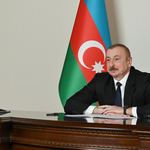
The alarming situation in Dagestan also raised concerns in Baku. On the same day Putin also spoke on the phone with Azerbaijani President Ilham Aliyev during which he raised the issue of the large number of Azerbaijanis stuck on the Russia-Azerbaijan border in Dagestan. The two presidents agreed to give instructions to the relevant ministries and departments of the two countries to quickly work out this issue in cooperation with regional authorities.
Vasiliev proposed to Putin a way to systematize the passage of Russian citizens of Azerbaijan through the border. “It would be nice if we could coordinate our actions. For example, 450 citizens switch from one side to the other and after 15 days, the same group of people passes,” said Vasiliev. He noted that 15 days is necessary to prevent the spread of infection. According to various estimates, there are from 200 to 400 Azerbaijanis on the border with Dagestan who are waiting for permission to return home.
As of 18 May, Russia was in second place after the United States in the number of Covid-19 infections, with 299 941 reported cases. Dagestan occupies the fourth spot of the most affected regions in Russia (behind Moscow, Saint Petersburg and Nizhny Novgorod Oblast) with 6952 cases, and 32 reported deaths.