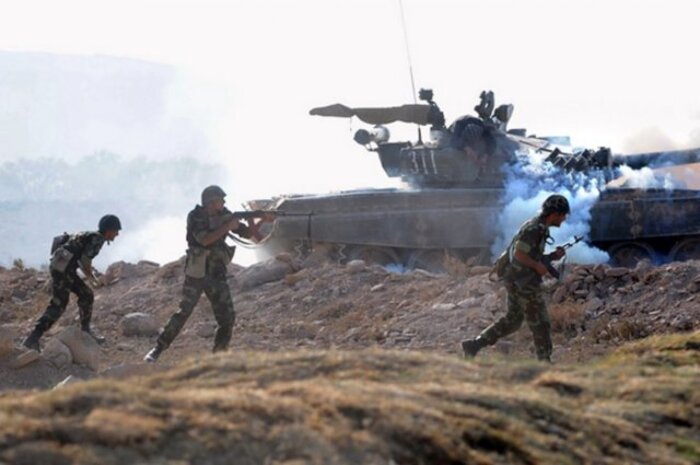
On 12 July, a major clash between the Armenian and Azerbaijani armies took place in the Tovuz/Tavush provinces at the border between the two countries, with clashes still ongoing.
Both countries delivered different narratives on who bears the responsibility for the outbreak of violence. The Press Secretary of Armenia’s Ministry of Defence Shushan Stepanyan said that “Azerbaijani troops, for reasons unknown to Armenia, attempted to violate the state border of the Republic in the Tavush direction with an UAZ vehicle.” “Azerbaijani troops used artillery fire, trying to seize an Armenian stronghold, but were thrown back by Armenian troops' fire, suffering casualties,” she added. “Gunfire is periodically continuing with various intensity. No Armenian soldier has been killed or wounded,” she further emphasized.
Armenia Prime Minister Nikol Pashinyan stated that no provocative actions by Baku will remain unanswered. “Instead of calling on their people to comply with the rules of epidemiological safety, the Azerbaijani leadership advocates military rhetoric and calls for war, as if Armenianophobia is the best way to combat Covid-19,” he said.
The country’s Foreign Ministry stated that the total responsibility for the incident lies with the military-political leadership of Azerbaijan. After the incident occurred, Armenia’s Foreign Minister Zohrab Mnatsakanyan held a phone conversation today with the Secretary General of Collective Security Treaty Organization (CSTO) Stanislav Zas. Mnatsakanyan stressed the inadmissibility of such actions against CSTO member states.
Azerbaijan’s Defence Ministry, on the other hand, stated that “units of the Armenian armed forces have sought to launch an attack using artillery to seize Azerbaijani positions in the direction of the Tovuz on the border.” “As a result of the relevant response, the adversary has suffered losses and retreated,” the ministry further emphasized. The ministry also reported that three Azerbaijani servicemen died, and four others were injured during the clashes on 12 July.
The country’s foreign ministry stated that clashes should be seen as a continuation of the recent actions and statements of the leadership of Armenia, which serve to increase tensions in the region. “Armenia, which has reflected its aggressive policy in the country's national security strategy, openly demonstrates that it aims to seize new positions and increase tensions in the region instead of eliminating the consequences of the conflict and withdrawing its occupying forces from the internationally recognized territories of Azerbaijan. This provocation by Armenia casts serious doubt on the essence of the negotiations mediated by the OSCE Minsk Group co-chairs on the settlement of the Armenia-Azerbaijan Nagorno-Karabakh conflict. Armenia is trying to involve third countries in the Armenia-Azerbaijan conflict with such provocative actions,” the statement read.
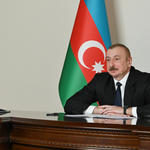
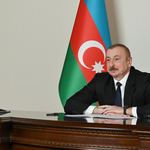
Azerbaijan’s President Ilham Aliyev said that the provocation was resolutely suppressed and that it received an adequate response. “Our servicemen were avenged. All attempts of the Armenian side failed, Azerbaijan defended its state border, and Armenian soldiers were unable to enter the Azerbaijani territory,” he said, adding that the situation remains tense on the border. He also said that the alleged Armenian provocations were a result of Azerbaijan’s increased international support in regard to the Nagorno-Karabakh issue.
The European Union, Russia and Turkey also made their statements over the worrying developments on the border. “Very concerned about exchange of fire on Armenia-Azerbaijan border. Important for both countries to show restraint and to use all channels of communication, both direct and the good offices of the OSCE Minsk Group Co-Chairs,” tweeted the EU Special Representative for the South Caucasus Toivo Klaar.
The Russian Foreign Ministry emphasized that the further escalation between the parties is inadmissible and threatened the security of the whole region. The ministry urged the conflicting parties to exercise restraint and strictly adhere to the ceasefire. The ministry expressed its readiness to provide necessary assistance to stabilize the situation.
The Turkish Foreign Ministry blamed Armenia for the incident. “The Armenian side should give up on such dangerous tactics and choose the path of reason and law. Embarking on adventurism for aspirations beyond its own capacity reveals Armenia’s failure of judgement and constitutes the biggest obstacle to peace and stability in our region. We hope that Armenia’s effort to cover up its own aggression will not be accepted by the international community in any way,” the ministry said.
On 30 June, a meeting between the Armenian and Azerbaijani Foreign Ministers, Zohrab Mnatsakanyan and Elmar Mammadyarov, took place via video conference. During the conference the region’s public health situation, current dynamics in the Nagorno-Karabakh conflict and next steps in the peace process were discussed. The OSCE Minsk Group positively assessed the relative stability on the ground and expressed satisfaction that the sides continued to use existing direct communication links to avoid escalation. However, they noted with concern that provocative statements, inflammatory rhetoric and possible steps intended to change the situation on the ground in tangible ways could undermine the settlement process (Caucasus Watch reported).
In a recent interview with Caucasus Watch, the researcher at the Centre for East European and International Studies in Berlin Nadja Douglas warned that recent developments in the Armenian-Azerbaijani negotiations over Nagorno-Karabakh “represent a renewed departure from both sides on the peace process.”