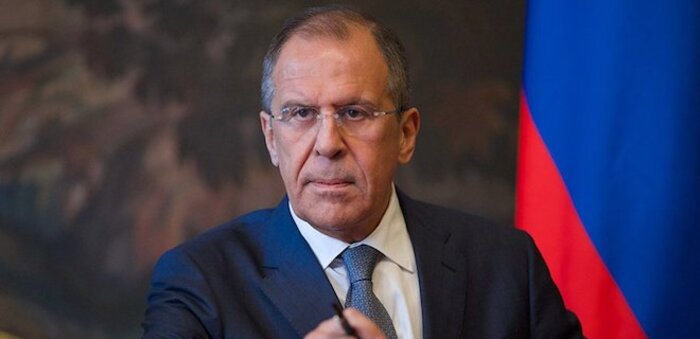
On 21 August, the Russian Foreign Minister Sregey Lavrov held an interview with the Russian newspaper ‘Trud’ where he spoke on a variety of issues regarding the Russian foreign policy.
When asked what was behind the escalation between Armenia and Azerbaijan on 12 July, Lavrov answered that it was based on many complex reasons. “The basis, of course, is the unresolved Karabakh problem. Plus, the exceptional overheating of the public space on both sides of the border. The geographic factor also served as a kind of trigger: the decision of the Armenian side to revive the old border checkpoint located 15 km from the Azerbaijani export pipelines caused heightened anxiety among some, an unjustified response from others and, as a result, launched a flywheel of confrontation with the most unpredictable consequences,” he said.
Lavrov then went on to say which measures Russia undertook in order to de-escalate the conflict. He said that on 13 July, the Russian MFA called on the parties to immediately cease fire and that he held telephone conversations with colleagues from Armenia and Azerbaijan. Lavrov also said that he met with representatives from organizations that unite Russian citizens of Azerbaijan and Armenian nationalities in order to calm the diaspora tensions in Russia.
“In August, the situation has more or less stabilized. Relative calm remains on the border and the contact line. Mutual public accusations subsided. We look forward to the early resumption of the negotiation process on the Nagorno-Karabakh settlement. We are working on this together with our partners in the OSCE Minsk Group,” he concluded.
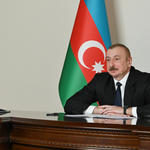
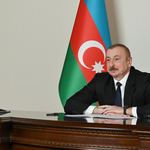
Although a ceasefire between Armenia and Azerbaijan was concluded on 16 July, tensions still remained high, with clashes between the Armenian and Azerbaijani diaspora worldwide (Caucasus Watch reported) and through military exercises (Caucasus Watch reported). On 12 August, Azerbaijani President Ilham Aliyev called his Russian counterpart Vladimir Putin to discuss Azerbaijan’s casualties during the hostilities and inquire over Russia’s arms delivery to Armenia during the clashes, which sparked internal debates in Azerbaijan on the political perception of Russia (Caucasus Watch reported).