Military developments
On 30 September, the press secretary of the de facto Nagorno-Karabakh President Vahram Poghosyan stated that Azerbaijan had taken aim at the city of Martakert/Aghdara, adding that 3 civilians were killed in the process.
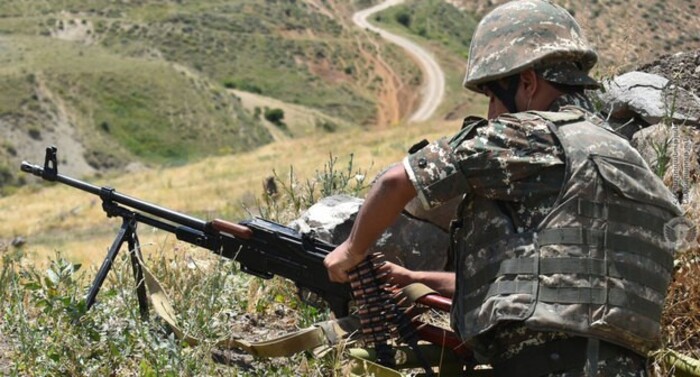
It was also reported that the Armenian military eliminated the Smerch and Uragan multiple rocket launch systems, a dozen other artillery and anti-tank weapons and one TOS multiple rocket launcher. The report also stated that 11 tanks, 3 infantry fighting vehicles and 6 armoured personnel carriers in the northern and southern sections of the line of contact were destroyed.
The Azerbaijani Ministry of Defence (MOD) stated early in the morning that the Armenian armed forces were massively shelling the city of Terter, as well as the Goranboy district and the Fuzuli district. It was also reported that Armenian armed forces fired two missiles from the “Tochka-U” high-precision tactical missile system in the direction of Azerbaijani units.
The Azerbaijani MOD also reported that the headquarters of the 5th mountain rifle regiment of the 10th mountain rifle division of the 1st Combined Arms Army of the Armenian armed forces in Aghdara settlement, as well as 1 "Uragan" multiple launch rocket system (MLRS), 1 "OSA" anti-aircraft missile system, 3 MLRS BM-21 "Grad", 1 infantry fighting vehicle, and 2 D-20 gun-howitzer were destroyed.
According to the press service of the General Prosecutor’s Office of Azerbaijan, 14 civilians were killed as a result of the hostilities and another 46 people were injured and hospitalised.
Political developments
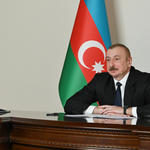
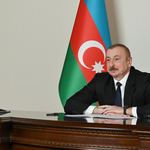
The Armenian Prime Minister Nikol Pashinyan and Azerbaijani President Ilham Aliyev both gave an interview during a live broadcast on Rossia-1. Pashinyan’s main arguments were: that Armenia’s actions were in response to Azerbaijan’s aggression; that there is not and will not be a military solution to the conflict; that Turkey is actively involved in the conflict; that Turkey to withdraw from the South Caucasus; that Syrian mercenaries are fighting alongside the Azerbaijani army; and that negotiations would require an appropriate atmosphere which could not be achieved during the hostilities.
Aliyev’s main arguments were: that hostilities broke out as a result of Armenian provocation; that Turkey plays a stabilising role in the region; that Armenia and Azerbaijan are the only sides in the conflict; that there are no fighters from Syria amongst Azerbaijan's military ranks; that Armenia violated the Geneva Convention by placing immigrants from Lebanon in Nagorno-Karabakh; and that Pashinyan needed an external factor to divert the attention of internal problems in Armenia.
Speaking with Russian journalists, Pashinyan stated that he does not intend to apply to the Collective Security Treaty Organization (CSTO) regarding the situation in the Nagorno-Karabakh. “Applying to the CSTO is a political issue. It is very difficult to talk about borders when it comes time to apply. We work closely with the CSTO, but the implementation of specific procedures is another matter. It is another matter whether with the CSTO or without the CSTO. We are considering all options to ensure our security—depending on the situation and the overall political context,” he said.
Meanwhile, Aliyev made a short address to the Armenian people. “I want to address the Armenian people so that they do not become hostages of the ugly deeds of their leadership and bring their governments to justice today. They should not send their children to Azerbaijan. What does an Armenian soldier do on Azerbaijani territory? We are fighting on our own lands. Our soldiers and officers are dying on their own lands, are getting wounded on their own lands, and we are liberating our own lands,” he said.
International reactions
Speaking to the media, the spokesperson of Russia’s Ministry of Foreign Affairs Maria Zakharova stated that no joint meeting of the Armenian and Azerbaijani ambassadors took place at the Ministry, but instead were held separately.
She noted that the meetings were not held in the traditional format, as not only representatives of the Russian Ministry of Foreign Affairs, but also of the Russian Ministry of Internal Affairs participated. Zakharova noted that the situation regarding Nagorno-Karabakh was discussed during the meetings, but the discussants mainly referred to the respective reaction of the Armenian and Azerbaijani diasporas. “We are talking not only about the Armenian and Azerbaijani diaspora living in the territory of Russia, but also about those who live abroad and are from the post-Soviet space; they also ask us questions,” Zakharova said.
The French President Emmanuel Macron stated that he was concerned by the latest statements from Turkey in regard to the conflict. “France is still very concerned about the latest calls from Turkey [for Azerbaijan to] conquer Nagorno-Karabakh... We will not allow this,” he said. “We will discuss this with our Russian and American counterparts Vladimir Putin and Donald Trump before presenting the situation in the European Council,” Macron added.
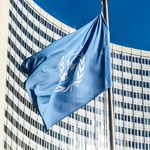
The Chairman of the UN Security Council Abdu Abarri said that a meeting with the participation of representatives from Armenia and Azerbaijan may be organised to “help them come to an understanding.” “The countries of the UN Security Council deeply condemned the use of force that has caused the death of people,” said Abarri.
It was reported that Turkey's presidential spokesman Ibrahim Kalin and U.S national security advisor Robert C. O'Brien spoke over phone about bilateral ties, the Nagorno-Karabakh conflict and developments in the Eastern Mediterranean. According to a statement by the presidential office, Kalin told O'Brien that Turkey would continue to support Azerbaijan’s territorial integrity and independence, and Armenia’s withdrawal from occupied territories was essential for regional peace and stability.
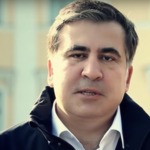
Georgia’s Prime Minister Giorgi Gakharia also suggested holding talks on Nagorno-Karabakh between Azerbaijan and Armenia in Tbilisi. He said that another military confrontation between Armenia and Azerbaijan created a grave situation in the region and that it is in the common interest for peace to be restored in the region as quickly as possible. It was also stated by Georgia’s chairman of the Parliamentary Committee on Defence and Security Irakli Sesiashvili that Georgia would not allow the transportation of any military equipment through its territory.