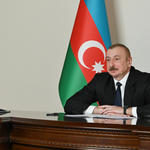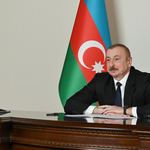
On 23 December, the Homeland Salvation Movement’s protest continued in Armenia demanding the resignation of the country’s Prime Minister Nikol Pashinyan.
The two main figures of the Homeland Salvation Movement, Artur Vanetsyan (leader of Hayrenik party) and Ishkhan Saghatelyan (Armenian Revolutionary Federation-Dashnaktsutyun), were both summoned by Armenia’s Special Investigative Service (SIS) during the protest. Vanetsyan told the reporters that he couldn’t provide details about the criminal case under which he was interviewed, but said he believed it was for the case regarding the offer for $5,000,000,000 for the sale of Nagorno-Karabakh. It was also reported that the mayor of Kajaran town Manvel Paramazyan was also summoned by the SIS on charges of organising and holding illegal rallies.
The Armenian Ombudsman Arman Tatoyan stated that there were “alarming tendencies” in the current political and social field of the country. “It is very worrying that the authorities and officials, various circles of the political or public opposition, ignoring the demands of the human rights protection system, in their public speeches contribute to the deepening of intolerance and the growth of tension,” he wrote on his Facebook page. The ombudsman noted with regret that the country has introduced and continues implementing the discourse of using the labels of “new and former,” “black and white,” regarding the socio-political platform. He stated that this is an unacceptable agenda that aims to divide society into groups and spreading discrimination.
According to Tatoyan, long-term and targeted monitoring of the ombudsman office shows that this unacceptable situation is further aggravated by the activities of fake pages and fake users of social networks (especially Facebook). These fake accounts support both power structures and various opposition circles that conduct organised and targeted attacks against each other. In his opinion, mutual insulting has become dangerously commonplace in the country.
“As a result, it turns out that the entire Armenian segment of social media is flooded with obscene language, mutual threats and words of hatred, which fundamentally violates the requirements of the human rights protection system. This is a path that leads nowhere and is full of dangers, it destroys the democratic values of our country, the achievements of the human rights system for many years,” he stressed.
As for Pashinyan, he wrote on Facebook that the talk about Armenia’s future was one of the most important issues in the country. “Even from the point of view of solving current issues because any issue has several options for a solution. [Though]… sometimes it is impossible to choose if you have not oriented what future you see, what future you want to build. The public-political discourse should be moved to this very dimension a day earlier,” he emphasised.