Lavrov and Cavusoglu discussed the 3+3 mechanism

Lavrov and Cavusoglu discussed the 3+3 mechanism

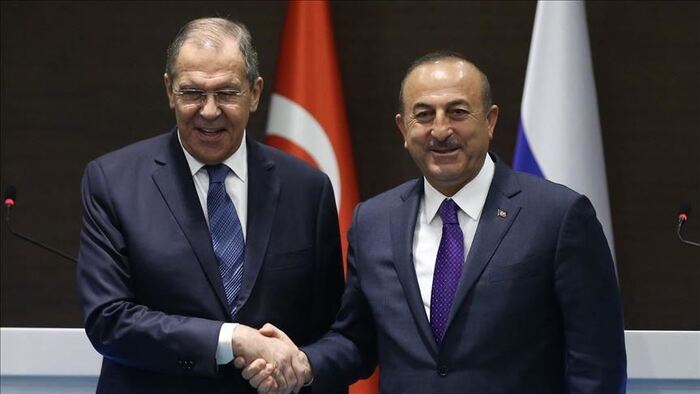
Turkish and Russian Foreign Ministers Mevlut Cavusoglu and Sergey Lavrov, who met in Rome on October 30 as part of the G20 summit, discussed the prospects for the launch of the 3+3 mechanism in the South Caucasus.

According to the Russian Foreign Ministry, the meeting focused on "coordination of efforts of the two countries to further stabilise the situation in the Balkans and the South Caucasus," and discussed the prospects for the launch of a regional mechanism in the 3+3 format.

"The sides exchanged views on the prospects of launching a 3+3 regional mechanism to open economic and transport ties and promote mutually beneficial infrastructure projects in the South Caucasus," Russian MFA said in a statement.

The idea of ​​a 3+3 regional cooperation platform to open economic and transport ties in the South Caucasus region was put forward by Turkish President Recep Tayyip Erdogan in December last year.

This platform envisages mutually beneficial cooperation between 6 neighbouring countries of the region (Turkey, Azerbaijan, Armenia, Russia, Iran, and Georgia), including the opening of transport lines.

4406 Mal angesehen

ARTICLES IN ENGLISH»


MEISTGELESEN


AKTUELLES


OPINION


Call for Contributors: Caucasus Watch is looking for experts, journalists and fact-checking specialists!

“Caucasus Watch” is seeking local specialists from Georgia, Armenia, Azerbaijan and the North Caucasus region, to assist our research endeavours and help enrich our content.

“Caucasus Watch” is an independent platform, which provides coverage of recent developments in various locations of the Caucasus region for the German and overall European stakeholders. We are an international team of Caucasus enthusiasts and are currently looking for local contributors who focus on social, economic, political and security dynamics of the said region.

The platform offers: I) a flexible format of cooperation, as well as competitive remuneration; II) access to English and German speaking readership in the wider European region; III) an opportunity to join the network of regional specialists through the initiatives and events to be organized by the Caucasus Watch and partner institutions.

Interested individuals are asked to provide a CV and a cover letter along with an abstract or a writing sample (in English or German), to the following address: redaktion@caucasuswatch.de.

Additional questions can be directed to Igor Dostalik through: i.dostalik@caucasuswatch.de.