During the first three quarters of 2021, the country's economic activity index was 4.4%, while the real estate industry was over 16%.
The country recorded 143,000 real estate sales between January and September this year, up more than 16% from the same time in 2020. Property sales accounted for 37% of all transactions.
“September has been somewhat record-breaking in the real estate market. This is especially visible in the mortgage sector, which is growing fast,” Armen Nurbekyan, the head of the Central Bank’s macroeconomics department, told journalists on November 2.
“From February 2021, the real estate market started getting more active, the price drop that we had in 2020 slowly came back to normal and became equal with pre-COVID, pre-war times,” Suren Tovmasyan, the head of Armenia’s Cadastre Committee, told. “We see a positive tendency, if the economy and political situation remain stable, the market will keep growing,” said Tovmasyan.
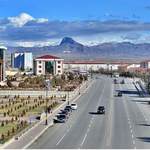
Prices have been steadily rising, particularly in Yerevan, where most of the activity is concentrated. Prices climbed 1.5% in the second quarter and 3.2% in the third quarter of 2021, following a 0.7% dip in the first quarter.
“There is an unexpected growth in activity of the market; we didn’t expect that after the pandemic, and in this political situation,” Vahe Danielyan, a real estate agent, said. “I think prices will grow further.”
But the increase in activity may not be a good sign for the economy.
“The market has grown but it means that people don’t know where else to invest,” economist Suren Parsyan told Eurasianet. “Instead of investing in industries like manufacturing, trade, or services, they are buying a property because there is little trust that the economy will be stable.”
The active market is most likely linked to the government's recent decision to end a scheme that enabled homeowners to deduct their income taxes from their mortgage payments.
The administration declared in August that it will phase out the program, citing a disproportionate number of recipients clustered in Yerevan as a reason. In July 2022, it will stop subsidising mortgages in Yerevan, and by 2025, it will have stopped supporting mortgages throughout the country.
“People were trying to get into the program before it’s too late,” Parsyan said.
The bill has already passed its first reading in parliament, the second reading has yet to be scheduled.