Pashinyan: “Baku’s actions prove Azerbaijan is responsible for blowing up gas pipe in Karabakh”
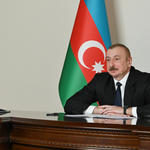
Azerbaijan has demonstrated that it is "responsible for blowing up a gas pipeline" that transports gas from Armenia to Nagorno-Karabakh by its activities. Nikol Pashinyan, Armenia's Prime Minister, declared.
“As you know, on March 7, a gas pipeline leading to Karabakh was blown up in the territory controlled by Azerbaijan. Under various pretexts, Azerbaijan did not allow the repair of the gas pipeline, and as a result, it repaired it itself. As a result, according to our information, a valve was installed on the gas pipeline. On March 18, the gas supply to Artsakh was resumed, and 4 days after that, Azerbaijan simply turned off the valve – without any explosions, thereby proving that it was responsible for the explosion.”
Pashinyan expressed confidence that "the people of Karabakh would also survive this test:
But realizing this, I must admit that Azerbaijan has served the people of Karabakh with its actions, because this episode with the gas pipeline for the international community will become a very accurate and concise description of the Artsakh problem. Thanks to this episode, the international community will be able to understand the essence of the Karabakh issue without flipping through hundreds of pages and without studying the nuances of history."
Pashinyan on Azerbaijan's unwillingness of opening of connections and economic issues in Armenia
The situation around the globe and in the region is stressful, and Prime Minister Nikol Pashinyan stated during the Cabinet meeting that Armenia considered itself accountable for de-escalating this tension and finding fundamental answers.
"We believe that peace discussions between Armenia and Azerbaijan should begin as soon as feasible in this respect. Furthermore, border delineation and delimitation activities must be expedited in tandem with steps aimed at improving border security and stability. You are well aware that we have proposed a reciprocal army pullback on the border, based on the de jure boundaries established between Armenia and Azerbaijan during Soviet times as a model for pulling back," the Prime Minister remarked.
Pashinyan went on to say that, in addition to the overall pull-out request, Armenia also suggested local withdrawals, and that Azerbaijan had yet to respond.
"In particular, in the Yeraskh sector, we recommended that they draw back several positions from our territory, and in exchange, we would pull back several positions from their territory, resolving the issue of one of the most violent places in the previous year and a half. We are awaiting Azerbaijan's reaction," the Prime Minister remarked.
However, Prime Minister Pashinyan stated that, considering recent events, it is questionable whether Azerbaijan actually desires the opening of regional links.
"It is unclear to us if Azerbaijan wants regional links opened or not. If it does, our recommendations remain in force, and we are ready to begin implementing them at any time, literally at any time," Pashinyan added, referring to the Armenian Crossroad project, which he has previously discussed.
At the Cabinet meeting, Prime Minister Nikol Pashinyan stated that "we are currently at the most significant juncture in the history of the Third Republic of Armenia, a period where the Armenian statehood appeared not once but twice."
"Unprecedented flexibility, a full and unemotional state are required for us to attain a suitable settlement from this same historic position. New mindset formulae are required. And we must navigate our ship through these turbulent geopolitical seas to a peaceful destination. I am certain that we will succeed, and perhaps this will be our historic mission," PM Pashinyan stated, underlining that “what is happening in the globe now began with what happened to us, and that what is occurring today will have a direct influence on us.”
"I also want to speak about hopeful news," Pashinyan stated when asked about economic concerns. “It's important to remember that we have solid reasons to keep our economic activities going. In Armenia, for example, the number of transactions recorded with point-of-sale machines climbed by 510,000 in the first 20 days of March compared to the same time the previous year, while turnover jumped by more than 60 billion drams. This is clearly not a fundamental indication, but it is a favourable signal related to the fact that we will have a large influx of people into Armenia in 2022, which will have beneficial economic consequences."
He went on to say that Armenia had a record number of registered workplaces in February, with 646,077. (10.3% increase against 2021 and 12.7% increase against 2019).
The average wage was 223,235 drams, a 9% rise over 2021 and a 25.3% increase over 2019.