
The State Oil Company of Azerbaijan (SOCAR) and the Swiss-Dutch company Vitol have agreed to transport about 1 million tons of Turkmen oil a year via the Baku-Tbilisi-Ceyhan (BTC) pipeline.
Until now, Turkmen oil has been transported by tanker from Russian rivers and seaports to Novosibirsk and from there by pipeline.
Earlier, SOCAR said it wanted to increase oil supplies via the Baku-Tbilisi-Ceyhan pipeline by attracting companies from Russia and Turkmenistan.
Energy analyst Ilham Shaban told BBC News Azerbaijani service that the transportation of Turkmen oil via the Baku-Tbilisi-Ceyhan pipeline between Azerbaijan and Turkmenistan began in 2010 and "this cooperation has never stopped."
He thinks that the cooperation between the two countries on the Baku-Tbilisi-Ceyhan transit could be an "example" between the oil-producing Caspian littoral states.
"The highest volumes occur after 2016 - up to 4 million tons. This is very favourable for Turkmenistan, because on its shelf Dragon oil and other companies producing oil in the Turkmen sector of the Caspian Sea supply some of their oil to the world market through Azerbaijan. This is the most optimal way, both in terms of logistics and access to markets."
Ilham Shaban says that three years ago there was some "reassurance" in Azerbaijan when the Russian company Transnet offered Turkmenistan to export some of its oil through Russia on "better terms."
"Of course, nothing stands still. SOCAR's agreement with Vitol, which sells Turkmen oil through Russia, shows that the Azerbaijani side is able to create better conditions in the market, thus attracting almost half of the volume. This means that there will be more transportation opportunities with BTC, and both the Azerbaijani side and the shareholders of BTC will have more opportunities to earn."
Mr Shaban said competition with Russian companies would not "negatively affect" relations.
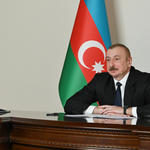
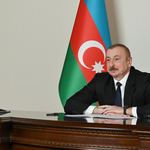
"Azerbaijan's advantage over other energy-producing countries is that the country has seven oil and gas export pipelines, and we use their opportunities very skilfully in the framework of cooperation. As President Ilham Aliyev said, we are trying to connect these pipelines. There should be no projects that separate and confront."
The length of the BTC pipeline is 1,768 km. 443 km of it is in Azerbaijan, 249 km in Georgia and 1076 km in Turkey.