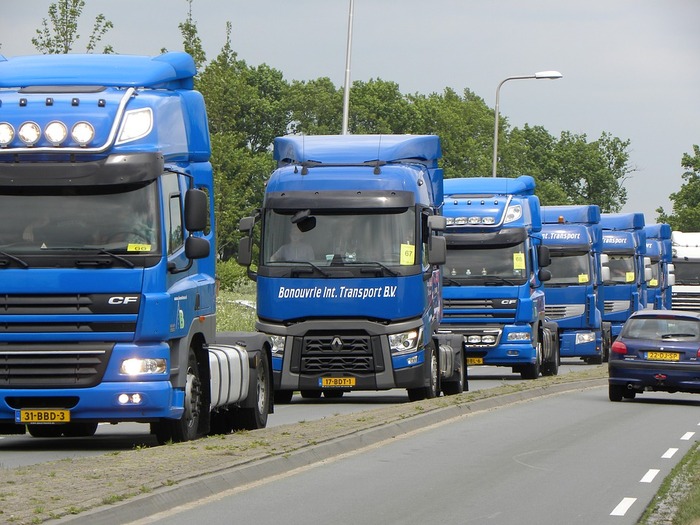
Georgia could open customs points at the borders with Abkhazia and South Ossetia under the agreement with Russia on trade and goods transit, reported the Russian newspaper Kommersant, citing an unnamed source in the Russian government. The Russian-Georgian agreement signed in 2011 provides for the creation of three trade corridors between Georgia and Russia. Two of these are said to run through the breakaway Georgian territories. In doing so, the document only regulates the obligations to monitor the flow of goods by third parties, but does not imply the automatic opening of transit corridors. This means that even if customs points were put into operation, transit corridors could continue to go unused.
"At its core, it's about this agreement requiring Georgia to recognize Abkhazia and South Ossetia as self-reliant customs areas", an anonymous Russian official said to "Kommersant". Tbilisi categorically refuses to look at the agreement from this perspective. "We don't engage in political debates and bypass contentious issues, because we recognize that the value of the agreement is in its neutral status," according to Zurab Abaschidze, special delegate of the Georgian prime minister on relations with Russia.
Georgian Foreign Minister David Zalkaliani denies that customs points will be opened at the borders with the breakaway regions. He explained that the 2011 agreement between Georgia and Russia, which included the monitoring of freight traffic between Russia and Georgia by a Swiss company, did not foresee the establishment of customs points. Zalkaliani accused Russian media of spreading fake news while also accusing the domestic opposition of aiding Russia in spreading false news. Former Georgian President Mikhail Saakashvili took the opportunity to harshly criticize the government. "According to the agreement I reached in 2012, customs points were only allowed to be built at our internationally recognised borders. This surrender of Ivanishvili will have catastrophic consequences for Georgian statehood in the long term", the opposition politician wrote on his Facebook page.
According to the agreement between Georgia and Russia, the monitoring of the flow of goods is to be carried out by the Swiss company "Société Générale de Surveillance" (SGS). The company is to monitor cargo traffic in both directions and report to the governments of Georgia and Russia. Each side insists that it takes into account its own position on the legal status of Abkhazia and South Ossetia. Russia recognizes these territories as independent states, while Georgia considers them Russian-occupied territories. The agreement intentionally did not address this point of contention, which made the signing of it possible after all.
Armenia, in particular, would be interested in the opening of the transit through South Ossetia, because it currently relies on the Georgian Military Highway, the only route for the travel of goods to Russia. This road however, is often closed in winter times due to difficult climatic conditions.
A meeting of the joint Russian-Swiss-Georgian Committee took place in Geneva on 6 February 2019, during which representatives from Georgia, Russia and Switzerland negotiated the implementation of the agreement. Since the signing of the customs agreement, Switzerland has acted as a neutral third party to facilitate the practical implementation of the agreement. That included helping select the neutral private company contracted by the two contracting states. Switzerland also proposed a funding mechanism to facilitate payments to SGS by providing an account for funds transferred from Georgia and Russia. Switzerland also agreed to chair the Community Committee of the customs agreement, whose task is to monitor the implementation of the customs agreement, resolve outstanding issues, resolve potential disputes and appoint experts if necessary.
Georgia and the occupied Tskhinvali region, also known as the "Republic of South Ossetia," have been separated by barbed wire since the August war of 2008. Russian Border Forces and the separatist republic's authorities erected new barbed wire fences in the village of Balta in the Kareli district in November 2018. There are regular arrests of Georgian nationals "for illegal border crossing" along the Russian-controlled Georgian border areas According to Georgia's State Security Service, a total of 117 people were detained by Russian troops in 2018 on the same charge, 95 in Tskhinvali and 25 in Abkhazia. Usually, those detained are released after paying a fine.
Russia recognized the regions of Abkhazia and Tskhinvali as independent states after the 2008 military conflict with Georgia. To date, only four countries recognize Georgia's breakaway regions as independent republics. These are Russia, Nicaragua, Venezuela and Nauru.