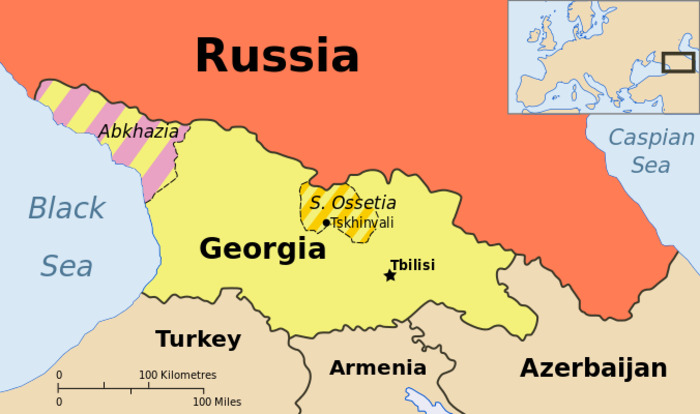
On 15 September, the Co-Chairs of the Geneva International Discussions (GID), which are responsible for the mediation efforts between Georgia, Russia and the separatist territories of Abkhazia and Tskhinvali (South Ossetia), released a statement in regard to the recent border tensions between Georgia and Tskhinvali.
“The ongoing closure of crossing points on the administrative boundary line with South Ossetia is creating additional hardship for the local people and is further raising tensions. We are in contact with all relevant actors, urging them to abstain from taking unilateral steps that have negative humanitarian consequences for conflict-affected people and undermine stability on the ground,” the co-chairs stated. The statement also called on all of the parties to engage constructively within the existing security and dialogue mechanisms and that it is “essential that conflict-affected people are not subjected to additional hardship and that their human rights, including freedom of movement, are fully respected.”
On 9 September the Tskhinvali KGB announced that two crossing points – Mosabruni of Akhalgori Municipality and Sinaguri of Sachkhere Municipality – connecting the region with the rest of Georgia will be closed temporarily, citing tensions coming from Tbilisi. It also noted that the crossing points will be opened as soon as “the situation returns back to normal.”
On 12 September spokesperson of the Russian Foreign Ministry Maria Zakharova stated in a public briefing that Abkhazia and Tskhinvali are relying on Russia’s allied assistance, which guaranteed their security and allows them to consolidate their statehood. “In general, over the past few years, both Abkhazia and South Ossetia, seriously affected by the Georgian aggression and economic blockade, have certainly established themselves as sovereign independent states,” she said. She also blamed the USA and EU for destabilizing the security situation in the South Caucasus.
On 14 September Georgian Foreign Ministry official Vladimer Konstantinidi said that Zakharova’s statement aimed to “divert attention from the current grave situation to some other dimensions, [to] cover up illegal occupation and ethnic cleansing.” Konstantidi also spoke about the closure of the crossing points stating that it was a “deliberate policy of the occupant[ing] regime aimed [at] destabilising the situation on the ground through various aggressive steps and provocations.”
According to the EU Monitoring Mission in Georgia (EUMM), there are five crossing points in the region – in villages Sinaguri (Sachkhere district), Karzmani (Sachkhere district), Zardiantkari (Gori district), Ergneti (Gori district) and Odzisi (Mtskheta district).