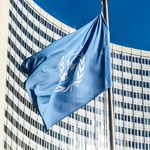
On 27 November, Georgia officially took the chairmanship over the Council of Europe (CoE) Council of Ministers from France.
The Chair of the Committee of Ministers is held for a six-month term in turn by the representatives of the members in English alphabetical order. The Chair is a neutral party and ensures that rules and guidelines are respected. The Chair guides the discussions, put proposals to the vote and announces decisions.
In his address to the public, Georgian Foreign Minister David Zalkaliani said that the chairmanship is a “big responsibility and a big challenge for Georgia, as our country will exercise its presidency in the international organisation for the first time”. “There are still many things to do in the country. However, today I can proudly say that Georgia is not only a country of ancient history and traditions, but also a successful and a modern state that gained its genuinely deserved place within the international community,” he added.
According to the ministry, Georgia will have four priorities: human rights and environment protection; civil engagement in decision-making process; jurisdiction oriented on children; and strengthening democracy with the engagement of education, culture and youth.
Two weeks before taking up the chairmanship, the CoE Secretary General Marija Pejčinović Burić visited Georgia in order to discuss the countries key priorities during their chairmanship, as well as launching the CoE Action Plan for Georgia 2019-2023.
“Our joint Action Plan aims both to support domestic reforms and enable better compliance with Georgia’s international obligations,” she said, stressing that the Action Plan would help further ensure the application of the European Convention on Human Rights, strengthen local government and citizen participation, and support justice reforms. “Confidence-building measures are also an important dimension of our cooperation and, as always, our projects are based on the recommendations of the Council of Europe monitoring and advisory bodies”, she added.
Before officially starting its chairmanship over the CoE Council of Ministers, Zalkaliani visited Germany where he met with Bundestag's President Wolfgang Schauble, as well as the Defence and Security Committee Chairman Wolfgang Hellmich to discuss Georgia’s NATO integration process and the situation in Georgia’s two Russian-occupied regions of Abkhazia and Tskhinvali.
He also met with his German counterpart Heiko Maas. “We are [closely] watching [the] ongoing processes in Georgia and expect the sides start a dialogue to resolve the problem. If we can contribute to this process, we will be happy to do so. Georgia’s sovereignty is not a matter of trade for us. Georgians have been travelling to Germany for two years without a visa… The [de facto] administrative line is blocked and people’s freedom of movement is severely restricted in South Ossetia and Abkhazia. Many of them are violently detained and this has to end,“ Maas said, noting that German relations with Georgia are very close and trustful.