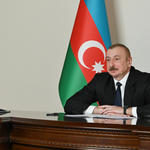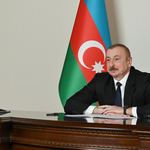
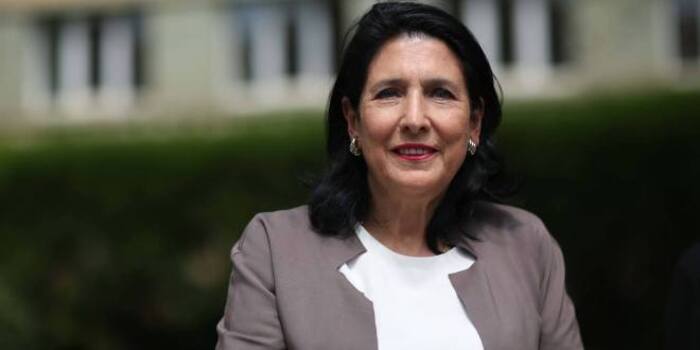
On 19 February, the Georgian President Salome Zourabichvili informed Director-General of World Health Organisation, the UN High Commissioner for Human Rights, and the Commissioner of the Council of Europe for Human Rights on the prohibition of Georgia-produced medicines in the separatist Tskhinvali region (South Ossetia).
“Closing the so-called border and imposing ban on medicines restrict fundamental human rights, including the right to health, the right to life and the right to movement,” the statement read. The President’s press office added that Salome Zurabishvili has called on the Commissioners to focus on the situation in the occupied territories of Georgia and to react through all possible means to these violations of humanitarian principles.
Georgian State Minister for Reconciliation and Civic Equality Ketevan Tsikhelashvili stated that there was “a real humanitarian crisis” in Tskhinvali which “is deteriorating on a daily basis.” She called on the occupying regime to reopen the Akhalgori crossing point “immediately and without any preconditions.” “This is a necessary step to overcome the humanitarian crisis and I call on the occupying regime and Tskhinvali authorities to take this step, considering the interests of population residing in Akhalgori and in the entire Tskhinvali region,” Tsikhelashvili added.
The de-facto Foreign Minister of Tskhinvali Dmitry Medoev claimed that the humanitarian crisis should be sought in the brains of Tbilisi politicians rather than in Tskhinvali. “It is better that the World Health Organization and other international organizations pay attention to the children starving in Georgia,” he said. As for the withdrawal of medicines with Georgian annotation from pharmacies of the occupied region, Medoev described the fact as ‘nonsense’ and underlined that these medicines were not produced in Georgia and their origin was not known. Therefore, they are not allowed to be sold across Tskhinvali.
On February 17, the de-facto interior ministry of Moscow-backed Tskhinvali region reported that following raids they have seized several “Georgia-produced medicines” from the two pharmacies of the occupied region due to illegal possession. Also, the media in Tskhinvali reported last week on empty shelves in local shops and humanitarian crisis facing the region. According to local news agency RES, trucks loaded with food were not allowed to cross “the South Ossetia-Russian border” since last week and the new law is cited as the reason. In particular, the North Ossetian customs officers are demanding requisite documentation of the Eurasian Customs Union for all freights heading to Tskhinvali. RES also noted that “the South Ossetian government” was carrying out negotiations with Russian counterparts to solve the problem.