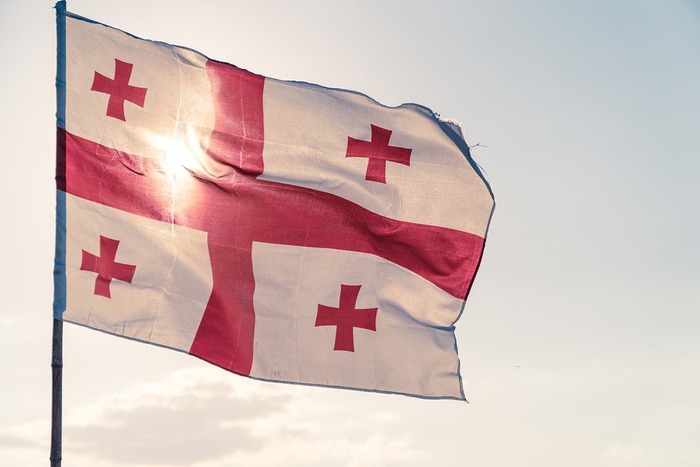
On 21 March, the Georgian parliament approved the declaration of a state of emergency until 21 April aimed to counter the global coronavirus pandemic with 115 votes in favour and zero against.
Addressing legislators prior to voting, Georgian President Salome Zourabichvili said that the state of emergency imposes only “essential restrictions, not the extreme ones”. In particular, she said neither the freedom of speech or media, nor political rights will be restricted in the country. She also noted that the parliamentary elections will be held six months after the revoking of the state of emergency.
The state of emergency allows the Georgian authorities to: 1) forcibly transfer a person to a [specific location] for violating the isolation or quarantine rules; 2) establish rules of isolation and quarantine 3) suspend international passenger air, land and sea traffic; regulate the carriage and transportation of passengers in the territory of Georgia 4) restrict property for quarantine, insulation and medical purposes, 5) restrict any kind of assembly, manifestation and assembly of persons; 6) establish rules other than those established by the laws of Georgia on education; and 7) mobilise persons with appropriate medical education and qualifications in accordance with the procedure. The judicial trials will also be held remotely for some time in the country. The school holidays have been extended until 21 April. Intercity traffic was also prohibited in the country.
Despite the state of emergency, the cargo transportation at Georgian sea-ports will remain normal. “While at this time our primary concern is for the health and safety of all our employees, all ports will remain open and continue to operate in accordance with WHO and Georgian government guidelines,” read the statement of Georgia’s Maritime Transport Agency. As for Georgia’s land communication with neighbouring Armenia and Azerbaijan, the Georgian citizens would only be able to enter the country through the Sadakhlo border crossing point from Armenia, and the Red Bridge border crossing point from Azerbaijan.
The municipalities of Marneuli and Bolnisi the eastern part of the country were placed under lockdown after a local tested positive for the virus. The 62-year-old woman tested positive for COVID-19 after coming into contact with more than 80 people and spending four days in a local hospital.
However, the rules of the state of emergency did not apply to the Georgian Orthodox Church. A senior representative of the Georgian Orthodox Church (GOC) stated that the clergy would not submit to the state of emergency. On the day when the state of emergency was declared, the Church conducted its service in the Cathedral of the Holy Trinity. The press speaker of the Patriarchate Andria Dzhagmaidze said that Prime Minister Giorgi Gakharia came to the church after the announcement of the emergency and told the clergy that the ban on meetings of more than 10 people should not be taken literally. Commenting on the issue, Georgia’s parliament speaker Archil Talakvadze said that religion is one of the [fundamental] freedoms and human rights, and as a consequence, religious services will take place despite the state of emergency in the country
Georgia had so far 54 confirmed cases of the virus, including eight individuals who have already recovered.