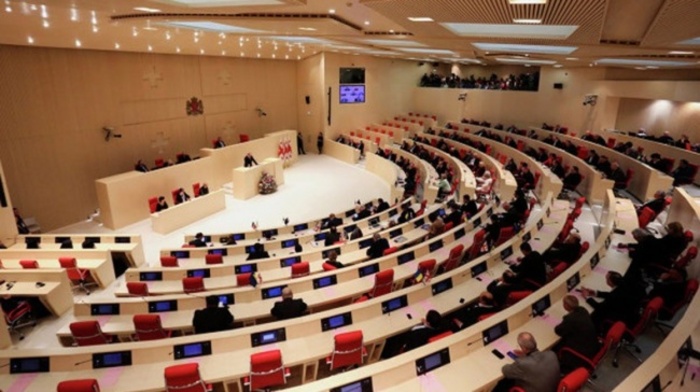
On 17 September, the Georgian parliament passed a set of amendments to the country's Labour code on their second reading, reported Open Caucasus Media. The reforms need to pass on its third and final reading in order to come to power.
The reforms offered new provisions concerning limits on work hours, mandatory weekly rest time, breaks between shifts, and better protections for interns, part-time employees and night-shift workers. The changes included updates to over a dozen Georgian laws, such as non-discriminatory clauses to protect women from unequal pay for equal work. More leverage was also to pregnant and child-rearing parents.
Additionally, state oversight of labour rights was broadened. A supervisory agency under the Labour and Health Ministry, the department would be transformed into a more independent institution headed by a Chief Labour Inspector. While the Chief Labour Inspector would still be hired and fired by the Health and Labour Minister, they would be responsible for running an agency overseeing all labour rights in Georgia. The new department would be able to enter all workplaces, not only those involving heavy and hazardous labour, without a court order or giving prior notice. The new labour inspectorate would have a mandate to warn, fine or in some cases temporarily suspend workplaces over poorly implemented labour rights.
The amendments were heavily criticized by Georgia’s Business Association (BAG), which includes the top executives from the Georgian Industrial Group conglomerate, Bank of Georgia, TBC Bank, pharmaceutical companies Aversi and PSP, the Silk Road Group conglomerate, and Tegeta Motors, claiming that the new Labour Code would be a setback for the Georgian economy.
BAG’s Executive Director, Levan Vepkhvadze, described the bill as ‘full madness.’ He insisted that the EU-Georgia Association Agreement, which includes provisions for labour rights in Georgia, should be implemented with exceptions related to Georgia’s economic situation. However, BAG were unsuccessful in their bid to have a regulatory impact assessment of the bill.
However, certain changes were made in comparison to the draft bill on Georgia’s labour right reform. One of the compromises was to drop the right for workers to hold strikes in solidarity with workers from other enterprises. In an apparent trade-off, the bill would update the Law of Georgia on Trade Union to reduce the minimum number of workers required to form a union from 50 to 25.
Another change to the original draft was a proposed limit on overtime work. The Georgian Trade Union Confederation (GTUC), which unsuccessfully pushed for a 48-hour cap on maximum overtime work per week, also failed to convince others to drop a provision allowing 'any other objective circumstance' to justify a dismissal. A provision to define a minimum wage and an overtime pay as at least 125% of normal wage were also removed, against the objections of many labour rights advocates.
Despite the compromises the lawmakers had to make, the amendments would mark the introduction of some of the most robust protections for Georgian workers since the mass deregulation of labour relations in the 2000s. “Georgia’s lack of labour regulations has led to poor labour practices that put thousands of workers at heightened risks,” said Giorgi Gogia on 18 June, the Associate Europe and Central Asia Director at Human Rights Watch. “Parliament should do the right thing and adopt reforms urgently needed to stop abusive practices and improve workers’ health and safety.”
A study by Human Rights Watch emphasized that years of deregulation have left Georgian workers without adequate protections. “In an effort to attract foreign investment, in 2006, Georgia abolished its Labour Inspectorate and dramatically reduced worker protections in the labour code by removing provisions on weekly rest, limits on overtime hours, and breaks during shifts. The 2006 labour code also made it possible to dismiss workers without notice and for any reason. Workers in Georgia paid a high price for deregulation and loose labour protections and oversight. One independent study found that deaths at work had soared by 74% since 2006, most of them in mining and construction,” the report emphasized.