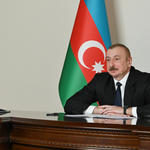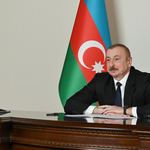
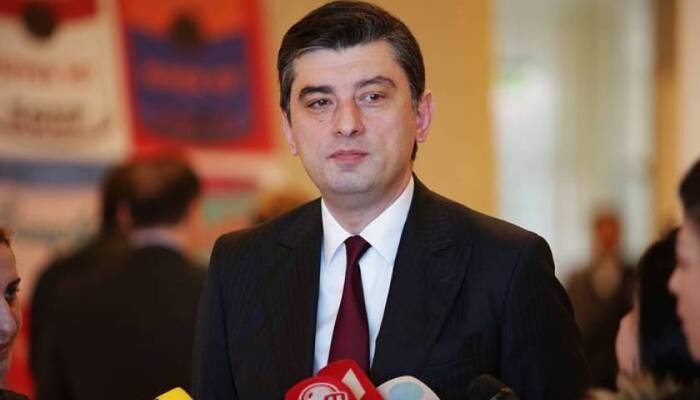
On 18 February, Giorgi Gakharia resigned from the post of Georgia’s Prime Minister, stating that his resignation was connected with the upcoming arrest of the opposition United National Movement leader Nika Melia (Caucasus Watch reported).
He explained that he considered it unjust to arrest the UNM Chairman in conditions when there is a danger of political escalation and had chosen to resign because he could not reach an agreement with his team. “Unfortunately, I could not reach a joint opinion with my team on this issue, so I decided to resign. I want to believe that this step will help reduce polarisation in the political sphere, because I am convinced that polarisation and confrontation between us is the biggest risk for the future of our country,” Gakharia stated.
The Chairman of the ruling Georgian Dream (GD) party Irakli Kobahidze confirmed Gakharia’s statement, adding that Gakharia’s reasons as to why Melia should not be arrested were “weak.” “A state which is unable to ensure the enforcement of law, especially when criminals pose such tough challenges, cannot constitute a state,” Kobakhidze underscored. He also stated that Gakharia’s resignation was “regrettable” and urged Melia to act in line with law, “otherwise he will be arrested.” Kobakhidze stated that the new candidate for Gakharia’s spot would be nominated on 19 February. Afterwards, GD party member Nikoloz Samkharadze announced that Gakharia also left the party.
As for Melia, he stated that the opposition “welcomed” Gakharia’s decision, but that it was not sufficient. “Mr. Gakharia has enough political and human sins in connection with 20 June, and he will never wash away this stain. The fact that Mr. Gakharia resigned today and practically admitted that bloodshed and violence were planned on the free will of free people, and that he did not do so, is appreciated. But that does not help the case. Rapid action will help. We, the main opposition movement, demand an urgent meeting with the representatives of the regime, with the participation of our partner ambassadors, on the only issue – new elections,” he stated.
Prior to Gakahria’s resignation, the Tbilisi City Court ruled that Melia be remanded into custody for failure to post bail, per the request of the country’s Prosecutor’s Office. UNM members, opposition leaders, and NGOs in the country opposed the court’s decision. Melia’s lawyers demanded recusal of the Tbilisi City Court’s judge Nino Chakhnashvili. The UNM vowed to form a “human shield” in front of Melia. “A bulk of people, supporters, members of the other opposition parties, are gathering in our office. [This] will stop the police from acting freely. The police have to clash with unarmed peaceful civilians,” stated Levan Bezhashvili from the UNM. The leaders of the opposition parties Lelo (Mamuka Khazaradze), Labour party (Shalva Natelashvili) and United Georgia Party (Nino Burjanadze) all voiced their support against the court's decision.
Several non-governmental organisations in Georgia (Open Society Georgia Foundation, Transparency International Georgia, Georgian Democracy Initiative, Democracy Research Institute and the Institute for Democracy and Safe Development) released a joint statement on the court trial of Nika Melia. They called on the General Prosecutor’s Office to study the circumstances, the current political context and discard the UNM leader’s imprisonment motion. According to the statement, imprisonment of the opposition leader hinted at selective justice. Some Georgian media channels reported that the country’s Ministry of Internal Special Affairs mobilised special forces in front of the UNM office in order to arrest Melia after the court hearing. The MIA refuted this information by saying that “law enforcers move on the territory of the UNM office every day” and that “nothing special was happening” at that moment. After Gakharia’s resignation, Melia’s arrest was postponed.
The EU und US embassies also expressed their concern following the court’s decision. The EU ambassador Carl Hartzell stated that Melia’s arrest would further deepen the Georgian political crisis and create additional barriers between the ruling party and the opposition to achieve an election agreement. The US embassy in Georgia called for all parties to avoid violence. “The current dangerous situation following the Melia ruling stems from decades-long problems with the electoral system and the judicial system. It is imperative the authorities and opposition exercise maximum restraint this morning. The way to address the important issues at stake is through peaceful negotiation,” the statement stressed. The US Senator Jim Risch and the EU parliamentarian Anna Fotyga also expressed their concerns.
Gakharia took over the spot of Georgia’s Prime Minister in September 2019 following the resignation of his predecessor Mamuka Bakhtadze (Caucasus Watch reported). Gakharia was one of the central figures in the mass protests in the country on 20-21 June (Caucasus Watch reported). The protesters later demanded his resignation as the internal affairs minister for legitimising the use of force against protesters on that day.