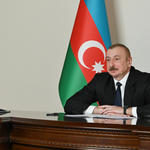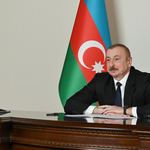
On 4 March, Georgia’s Prime Minister Irakli Garibashivili instructed the country’s Economy Minister Natia Turnava and Agriculture Minister Levan Davitashvili to visit Tsageri municipality and meet locals to discuss the issues related to the Namakhvani hydropower plant.
“In response to the population’s concerns over the Namakhvani HPP, there are certain questions being raised, and every question must be answered adequately, reasonably, and professionally. Energy security, energy independence are among Georgia’s main priorities,” he said. “The volume of imported power is growing by the year. Energy projections show that at least 100 MW HPPs must be built every year, something missing at this point. But we, of course, must find the golden mean, and to that end it is vital to maintain direct communication with the public so that all questions our society may have are answered,” Garibashvili added.
A day earlier, the Georgian Human Rights Training and Monitoring Center (EMC) questioned the Namakhvani HPP project benefits, arguing that the agreement between the Georgian government and the Turkish company ENKA Renewables Ltd was favourable for the investor company. After studying the contract conditions, EMC said Namakhvani HPP construction poses several risks to the country. “It casts doubts on the economic utility and its role in the country’s energy security. Not only is detrimental to Georgia’s energy security, but the agreement brings heavy and undetermined fiscal burdens for the state budget. The contract analysis showed that the government granted several guarantees and conditions to the investor company, which allows bypassing the strict requirements of the law to summarily secure basic permits and start construction,” the statement read.
On 28 February, a protest was held in the Georgian city of Kutaisi where thousands of citizens opposed the construction of the hydropower plant. The Namakhvani HPP cascade project is planned to be built in the Tskaltubo and Tsageri municipalities north of Kutaisi. The project has met strong local resistance from a grassroots movement organised by local residents along the River Rioni Valley. Critics said that the project would affect the environmental, social, and cultural setting in Georgia’s Imereti and Lechkhumi regions.
Opponents of the Namakhvani project have been critical of the Ministry of Environment for issuing early approval to Enka Renewables a year ago. Frustration grew when the company, according to watchdog groups Georgian Young Lawyers Association (GYLA), Green Alternative, and EMC, started “preparatory works” in Zhoneti on 22 February 2021 without providing “up to 25” studies on the project’s environmental, social, and cultural impact demanded by even the disputed conditional approval. Critics also highlighted that local residents have been mostly deprived of participating in public discussions over the project, as per Georgia’s Environmental Assessment Code.