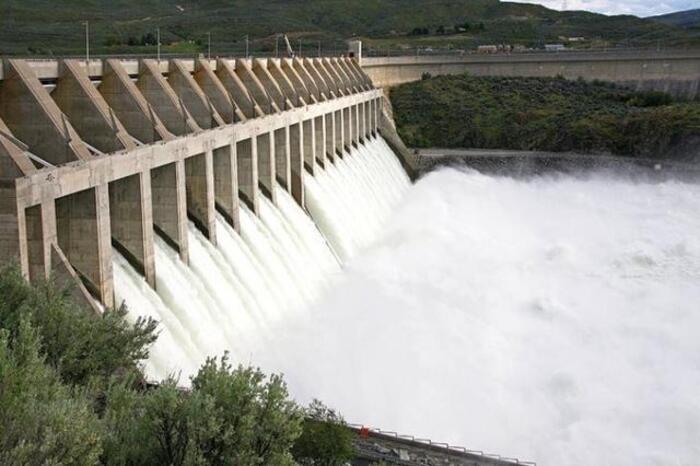
On 10 May, Georgia’s Economy Minister Natia Turnava announced that the construction of the Namakhvani Hydropower plant (HPP) in western Georgia, in particular the dam, would be suspended for the next 12 months, reported agenda.ge.
“We are acting within the law and in accordance with priorities...What we have achieved is that the dam will not be built in the next 12 months, i.e., a moratorium on the construction of the dam has been announced,” Turnava stated. She said that major studies will be re-verified and validated. “This mediation process will be held between the non-governmental sector and the government about the environmental impact assessment, and how the future study will be conducted. This will build trust in the project. The chairman of the EU energy union disputes council is involved in the mediation process,” Turnava said. She added that a visit of government members to the Rioni gorge is not planned at this stage, however she emphasised that “the door is always open” for negotiations.
On 3 March, the Georgian Human Rights Training and Monitoring Center (EMC) questioned the Namakhvani HPP project benefits, arguing that the agreement between the Georgian government and the Turkish company ENKA Renewables Ltd was favourable for the investor company. After studying the contract conditions, EMC said Namakhvani HPP construction poses several risks to the country. “It casts doubts on the economic utility and its role in the country’s energy security. Not only is detrimental to Georgia’s energy security, but the agreement brings heavy and undetermined fiscal burdens for the state budget. The contract analysis showed that the government granted several guarantees and conditions to the investor company, which allows bypassing the strict requirements of the law to summarily secure basic permits and start construction,” the statement read.
On 28 February, a protest was held in the Georgian city of Kutaisi where thousands of citizens opposed the construction of the hydropower plant. Frustration grew when the company, according to watchdog groups Georgian Young Lawyers Association (GYLA), Green Alternative, and EMC, started “preparatory works” in Zhoneti on 22 February 2021 without providing “up to 25” studies on the project’s environmental, social, and cultural impact demanded by even the disputed conditional approval (Caucasus Watch reported).