On 30 May, the leadership of the largest opposition party in Georgia, the United National Movement (UNM), decided to enter the parliament after months of negotiations.
The chairman of the party Nikanor Melia announced the decision but added that his fellow party members would not sign the compromise document proposed by European Council President Charles Michel on overcoming the political crisis in the country (Caucasus Watch reported). Melia referred to the amnesty bill for convictions stemming from the June 2019 protests in Tbilisi as the reason for not signing the document. “There is one point in this agreement that is categorically unacceptable and in view of all this, we cannot sign this paper. As for the remaining points, we will work on them and fight against the disruption created by the Georgian Dream,” he said.
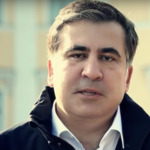
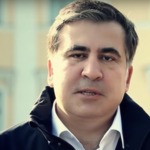
Melia also noted that the most relevant and right decision was made now to resist Bidzina Ivanishvili, founder and former chairman of the ruling Georgian Dream party. “We will fight against him everywhere, be it the parliamentary session hall, committee halls, halls of the Supreme Council of Adjara, squares, streets, villages, districts, mountains, we will resist Bidzina Ivanishvili everywhere,” Melia said. “There’s no way back. There are two choices left: Georgia will win or lose. And Georgia will win!,” he stressed. The UNM discussed the issue of entry into the parliament with former President of Georgia Mikheil Saakashvili in Ukraine, after which, he held meetings with party members and supporters in the regions.
The ruling Georgian Dream party issued a statement following UNM’s decision to enter the parliament. “Radical United National Movement, having effectively admitted defeat of their destructive political agenda, takes up seats in Georgian Parliament,” the GD statement read. GD’s chair Irakli Kobakhidze said that UNM’s decision was “a final act of their failure.” “They (UNM) have been sabotaging… a legitimately elected parliament for six months, warning of boycotting the parliament. However, eventually they had to retreat and declare political capitulation. UNM failed to fulfil any of its promises. On top of that, they will not benefit from any of the privileges provided by this paper. We are confident that the UNM will finally have to step back and sign it,” he underscored.
The EU and US embassies in Georgia also responded to UNM’s decision not to sign the document. “Today, the largest opposition political party in Georgia, the United National Movement, announced that its elected Members of Parliament will enter Parliament. Following this decision, almost all of the 150 MPs will now carry out their mandates entrusted to them by the citizens of Georgia in the 2020 parliamentary elections. This development is another positive step towards the strengthening of Georgia’s democratic institutions, and we encourage the UNM Members to use their mandates constructively,” the statement read.
“However, we strongly regret that the UNM did not seize the opportunity today to join the other parliamentary parties in signing the 19 April Agreement. The UNM shares the responsibility with the other elected parties to engage constructively in Parliament to address perceptions of politicised justice, adopt and scrutinise the implementation of ambitious electoral and judicial reform and participate in power-sharing within Parliament, among many priorities. This is important work that needs the responsible participation of all of Georgia’s elected leaders. By signing this agreement, the UNM would demonstrate its commitment to carry out these fundamental objectives in the interest of Georgia, its citizens, EU-Georgia relations, and Georgia’s Euro-Atlantic future,” it added.
It should be noted that on 18 May, the other opposition party that refused to enter parliament, European Georgia, decided to remain firm on their position. The Secretary General of the party Akaki Bobokhidze argued that the Georgian Parliament is illegitimate and thus his party would not take their seats.
Gakharia returns to politics
On 29 May, Georgia’s former Prime Minister Giorgi Gakharia unveiled his own political union under the name “For Georgia.” During the presentation of his political union, Gakharia named weak institutions as the biggest challenge facing the country and vowed to tackle corruption and nepotism. “Today we unite for Georgia, but against no one. Our team will be actively involved in the political process for Georgia, and I emphasise once again, against no one,” Gakharia said.
Gakharia also touched on his resignation 100 days earlier (Caucasus Watch reported). “I resigned because, after eight years in power, the ruling Georgian Dream party compared their achievements with the reality of 10–15 years earlier… I resigned because the GD lost its focus on the real problems of our citizens for the simple reason — somehow fighting political opponents became a more important topic than solving the problems of our ordinary citizens,” he stated.
Georgia’s former Prime Minister presented several members of the party, mostly comprised of technocrats and former mid-level public officials. These included six sitting MPs who have defected from the ruling GD party, Giorgi Abashishvili, the former Chief of Staff and Economic adviser to fourth Georgian President Giorgi Margvelashvili, and Levan Dolidze, a former Ambassador to NATO.