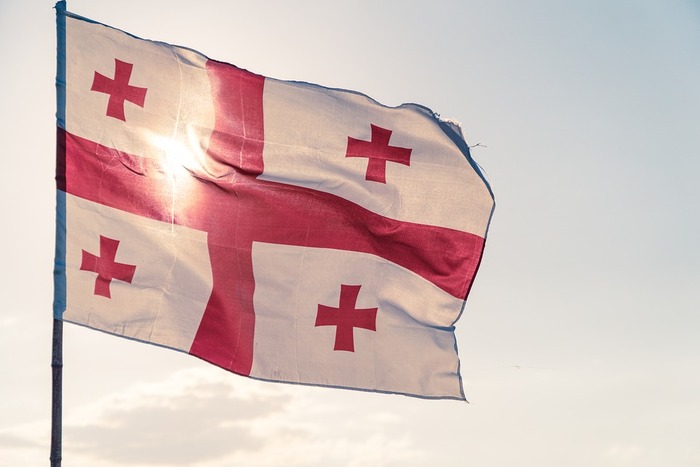
Visit of Azerbaijani National Assembly Speaker to Georgia
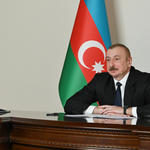
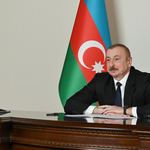
Azerbaijani National Assembly Speaker Sahiba Gafarova visited Georgia April 19th. Bilateral relations between Georgia and Azerbaijan, as well as the regional situation amid Russia’s invasion of Ukraine were discussed with the Georgian President Salome Zourabichvili.
Both sides highlighted the importance of strengthening political, economic, and cultural ties between Georgia and Azerbaijan and pointed out that the South Caucasus region needed “peace and stability” in order to achieve its “full potential.”
Sahiba Gafarova also met the speaker of the Georgian Parliament Shalva Papuashvili and called the two states “strategic partners.” “Cooperation between [our] two countries is based on a solid relationship. I would especially like to note that at this stage, the relations between [our] parliaments are at a very high level,” Gafarova noted.
In a meeting with the Prime Minister of Georgia Irakli Garibashvili, the strategic partnership between Georgia and Azerbaijan as well as the questions of strengthening economic ties, transport, and energy projects in the South Caucasus region were discussed. The Baku-Tbilisi-Ceyhan (BTC) oil pipeline, the Baku-Tbilisi-Erzurum (BTE) gas pipeline, the Trans Adriatic Pipeline (TAP), and the Trans Anatolian Natural Gas Pipeline (TANAP) were topics of conversation.
The Georgian PM mentioned the resumption of meetings of the Intergovernmental Economic Commission of the two countries was a “key factor” for the maintenance and development of regional projects and formats, which in turn “will increase the attractiveness of the [South Caucasus] region.”
The leader of the Droa party, spoke about the "avoidance of sanctions" by Russia through a company based in Georgia
According to Elene Khoshtaria, the Russian Authors Society "Rao" sent a letter to the Estonian Authors' Society, stating that it offers the Estonians to avoid sanctions through the Georgian company "Gera." Khoshtaria published a letter in which she argued that since Rao was unable to make monetary transactions due to sanctions, it asked the Estonian Authors' Society to transfer the royalties to Georgia through their partner organisation Gera.
According to Khoshtaria, the state should be interested in this case and, should ensure that, according to Georgian law, Russian companies cannot avoid sanctions and Georgian companies cannot be used.
"I have official documents from Russia about the repeated receipt of financial resources from Gera, and in practice, we have direct evidence that Russia offers other countries to avoid sanctions through a company in Georgia. I know that the representatives of the cultural sphere are united in ‘Gera,’ and I hope that they have no information about it and such information will be a reason for them to break off relations with the ‘blood machine.’”
“There is also talk of Georgian legislation that allows for such machinations. Accordingly, the Georgian government should investigate the relations of this particular company with Russia and should change the legislation so that this mechanism does not come into play, including through other companies. Otherwise, we will be direct participants in the 'evil machine' that people sacrifice every day," Khoshtaria said.