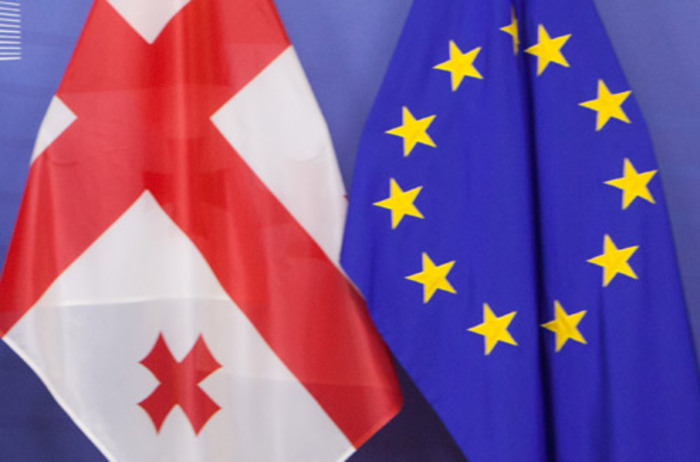
Nicholas Cendrowicz, Deputy Head of Unit at the European Commission’s Directorate-General for Neighbourhood and Enlargement Negotiations has identified judicial independence and political polarisation as key obstacles for Georgia as the EU membership application process continues.
Cendrowicz said at a virtual panel discussion hosted by the Georgian Young Lawyers' Association, a local advocacy group, that "the rule of law and judiciary independence are… vital in assessing whether a country is ready to join the EU." He stated that the Commission, which is responsible for providing an opinion on Georgia's membership application, is aware of the country's "issues of, let's call it, the politicisation of the judiciary and the number of independent entities." Cendrowicz stated that developing a consensus and making decisions "normally" is important when it comes to EU membership, but the political climate in Georgia "is not really conducive to having those kinds of normal, bread and butter and boring discussions about some of the nuts and bolts of the accession process." The EU official stated in his speech that the application procedure "at some point" necessitates making a lot of political decisions. "Georgia has the potential to achieve that, and your administration and ministries have the capacity to accomplish that," he insisted, "if there is the political will to make these difficult choices." He also mentioned that Georgia's economy is "essentially aligned" with that of the EU, and its public administration "works fairly effectively," according to the European Commission official, both of which are the result of a series of reforms.
Although Cendrowicz stated that Georgia must be prepared to put in "hard work and research" during the EU application process, he also stated that significant political considerations, particularly geopolitics, will be considered by member states when deciding on Georgia's bid. "Political issues will be far more relevant than whether Georgia has embraced the guideline on energy efficiency criteria for hair dryers, for example," he said.
When asked about Georgia's unwillingness to join the sanctions on Russia over the Ukraine crisis, Cendrowicz said the Commission would not "necessarily" take Tbilisi's attitude into account when drafting the opinion. "I believe we have a basic knowledge of Georgia's perspective," he said. "While we understand there are things Georgia can and cannot do, perhaps this is also a matter of communication," Cendrowicz added, "it is perhaps a bit unseemly that some politicians have presented non-total alignment with sanctions as an opportunity for Georgia, and this is something we should be very careful about."