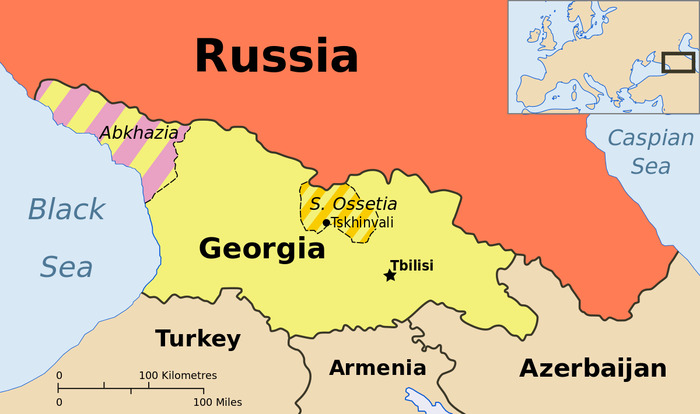
The Co-Chairs of the Geneva International Discussions (GID), Toivo Klaar, European Union Special Representative for the South Caucasus and the Crisis in Georgia, Ayşe Cihan Sultanoğlu, United Nations Representative, and Viorel Moşanu, OSCE Special Representative, visited separatist Abkhazia and the Tskhinvali Region. On May 31, in Sokhumi, the Co-Chairs met with de facto Abkhaz authorities who have stated their desire to continue the work of the GID, which was halted in March owing to Russia's invasion of Ukraine.
On June 2, the Co-Chairs visited Konstantin Kochiev, advisor to separatist South Ossetian leader Alan Gagloev, in the Tskhinvali region, who emphasized the significance of the GID, stating that "the very existence of this format allows for the maintenance of regional stability." He mentioned that de-facto authorities take notice of foreign actors' calls to Georgia to utilize the present moment to accomplish their geopolitical objectives by force, as well as the growth of Georgia's military cooperation partners, which creates security threats in the region. It is noteworthy that participants from Georgia, Russia, and the United States, as well as representatives of the exiled Georgian administrations of Abkhazia and Tskhinvali Region and the Russian-backed authorities of the two regions, are participating in their personal capacities in the Geneva International Discussions.
In early May, Caucasus Watch reported that Denis Gonchar, Director of the Russian Foreign Ministry's Fourth Department for CIS Countries, emphasized Moscow's support for the Abkhazia and Tskhinvali regions and the postponement of the Geneva International Discussions. According to the Russian official, the situation between separatist Abkhazia's and South Ossetia's de facto separation lines with the rest of Georgia is quite stable. "We've also noticed a decrease in the number of incidents and offensive utterances." According to Gonchar, the next step should be restoring the Gali Incident Prevention and Response Mechanism (IPRM) meeting between Tbilisi and Sokhumi delegates, which has been suspended since 2018 as a result of Tbilisi's Otkhozoria-Tatunashvili list. Gonchar also noted Russia's support for the occupied regions of Abkhazia and South Ossetia in the context of international sanctions against Russia. The official said that, despite their protests, Sokhumi and Tskhinvali are not affected by Russian restrictions on international trade and export bans on certain goods.