On 22 May, the United States announced its plans to withdraw from the Open Skies Treaty stating Russia’s refusal to adhere to the treaty as the reason for withdrawal.
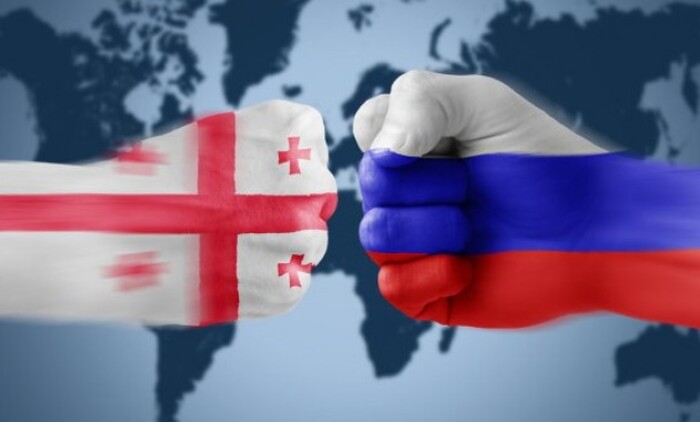
The US specifically named Georgia and its separatist regions of Abkhazia and Tskhinvali (South Ossetia) as an example of how Russia violates the conditions of the treaty. “Russia has refused access to observation flights within a 10-kilometer corridor along its border with the Russian-occupied Georgian regions of Abkhazia and South Ossetia (Tskhinvali), thereby attempting to advance false Russian claims that these occupied territories are independent states,” read the official statement by the US Department of State. The refuelling of the airfield in Crimea and the restrictions on flight distance over Kaliningrad were also named among the reasons for US withdrawal.
NATO Secretary General Jens Stoltenberg also said that Russia imposed flight restrictions which were “inconsistent with the Treaty.” “Russia’s ongoing selective implementation of its obligations under the Open Skies Treaty has undermined the contribution of this important Treaty to security and stability in the Euro-Atlantic region,” he said. Stating that Russia’s return to compliance “is the best way to preserve the benefits of the Treaty,” Stoltenberg noted that NATO allies would “continue to aspire to a constructive relationship with Russia, when Russia’s actions make that possible.”
Russia on the other hand, has vowed to maintain the Open Skies Treaty. Russia’s Deputy Foreign Minister Sergei Ryabkov warned that a potential US withdrawal would undermine global security and mean there was also little hope that a separate nuclear arms control agreement — the last remaining defence pact between the two countries — would survive.
Georgia’s Foreign Minister David Zalkaliani said that Georgia suspended the treaty in regard to Russia in 2012 as Russia “has made wrong interpretations of all international agreements, including the treaty,” following the Russia-Georgia war in 2008. He said that Georgia has been in close cooperation and communication with its strategic partner, the US, regarding the issue. Zalkaliani said that Georgia continues consultations with other signatories of the treaty on how Georgia might be involved in the treaty in the future.
The Treaty on Open Skies entered into force on 1 January 2002, and currently has 35 party states. It establishes a program of unarmed aerial surveillance flights over the entire territory of its participants. The treaty is designed to enhance mutual understanding and confidence by giving all participants, regardless of size, a direct role in gathering information about military forces and activities of concern to them.
Sharper rhetoric from Georgia towards Russia
On 24 May, in an interview with the “Financial Times” the Georgian President Salome Zourabichvili warned that Russia’s struggle to contain the spread of coronavirus and an economic crisis compounded by an oil price collapse risks triggering new Kremlin aggression beyond its borders. She said that she was disappointed the Kremlin had not taken the opportunity offered by the health emergency to scale back its deployment of missiles and radar in the disputed territory of Abkhazia. She also said the health emergency had also created fresh risks in Russian-occupied areas because of Moscow’s lack of openness over its Covid-19 outbreak and its “absurd” restrictions on access for Georgian authorities to aid citizens in Tskhinvali.
On 22 May, the Georgian Foreign Ministry also said that Russia has been particularly active in its creeping annexation of more Georgian territories over the past two months and that Russia’s fight against the US-built Lugar Centre in Tbilisi has become intense. The ministry condemned the recent erection of illegal barriers in the village of Mereti in the Gori municipality of Georgia and said that barbed-wire fences, illegal barriers and so-called anti-fire ploughs have been made at both occupied regions of Georgia - Abkhazia and Tskhinvali during the coronavirus pandemic.
The ministry also stated that Russia continues its “disinformation campaign” against the Lugar Centre in Tbilisi, which is under the full control of Georgia’s National Disease Control Centre. The ministry emphasized that Russia “deliberately activated” hybrid war against Georgia. Through the use of “fabricated propaganda myths” Russia was trying to attack the Georgian National Disease Control Centre and its Lugar Lab “which has played a crucial role in Georgia’s very effective fight against the coronavirus.”
The statements came after the de facto government of Tskhinvali accused Tbilisi and the European Union Monitoring mission (EUMM) of “secretly collecting biological materials of the Tskhinvali people, which serves the goal of continuing the genocide over them.” The de facto Security Committee of Tskhinvali said that the biological materials were transported to Tbilisi Lugar Centre and mentioned observing “Georgian ambulance cars at the border twice,” claiming that the EUMM ensured the “secretive movement of Georgian doctors.” The EUMM stated that the ambulance was clearly visible and “there was no secretive movement.”